"Who Owns Black Data?" The Case for Black Digital Humanities and an Ethic of Recovery, Redress, and Reciprocity
Jasmine Harris | SEP 12, 2024
"Who Owns Black Data?" The Case for Black Digital Humanities and an Ethic of Recovery, Redress, and Reciprocity
Jasmine Harris | SEP 12, 2024
This week's topic was titled “Who Owns Black Data? The Case for Black Digital Humanities and an Ethic of Recovery, Redress, and Reciprocity.” Digital humanities could be considered a coalition of artist, scholars, teachers, and media makers working in the field of digital humanities and offering insights from the fields of ethnic studies, women's and gender studies, queer studies, environmental studies and beyond. Interest in digital humanities stems from an interest in digital archives, exhibits, online publishing, and other public facing humanistic work. In the context of black data, Digital Humanities is considered a force for transformative scholarship by collecting, sharing, and highlighting projects that push the boundaries and work for social justice, accessibility, and inclusion. The digital aspect of social media allows movement to be mobilized such as #transformDH or #blacklivesmatter. #transformDH stands for transforming digital humanities; the transformation is called to arms in an approach as a academic guerrilla movement seeking to redefine the field. This approach encourages the consolidation of digital humanities as a field presented university- affiliated laborers the chance to explicitly explore projects pertaining to the realm of power structures (antiracism, anti-ableist, radical and inclusive academic projects).
The concerns of ownership arise. There is a wealth of black data out in the sphere; data that has already been in circulation and data yet to be brought to our attention as weel as the data that has yet to be discovered. I think the term ownership may be vague in the context of some of the week's readings. However, who owns black data, to do what with it. Black data – archives serve to rationalize the story of the black experience with evidence. When building a database, depending on who taking the authorities role in constructing the parameters of data can leave traces of bias especially if the person handling said duty seeks to commodify or exploit. When ownership of black data is placed in duty of person from that community; a well-informed member can act as a disruptor to the status quo of ethics, standards. When building a database one can create their own standards and ethics around the parameters of the data; essentially disrupting tools of retrieval within the context of concerns with ownership of black data. I think there is a difference between being owners of black data, stewards or managers of black data and curators of black data. Integrity of ownership can be compromised in an example if a person trying to access records, they can be faced with a paywall to access family photos.
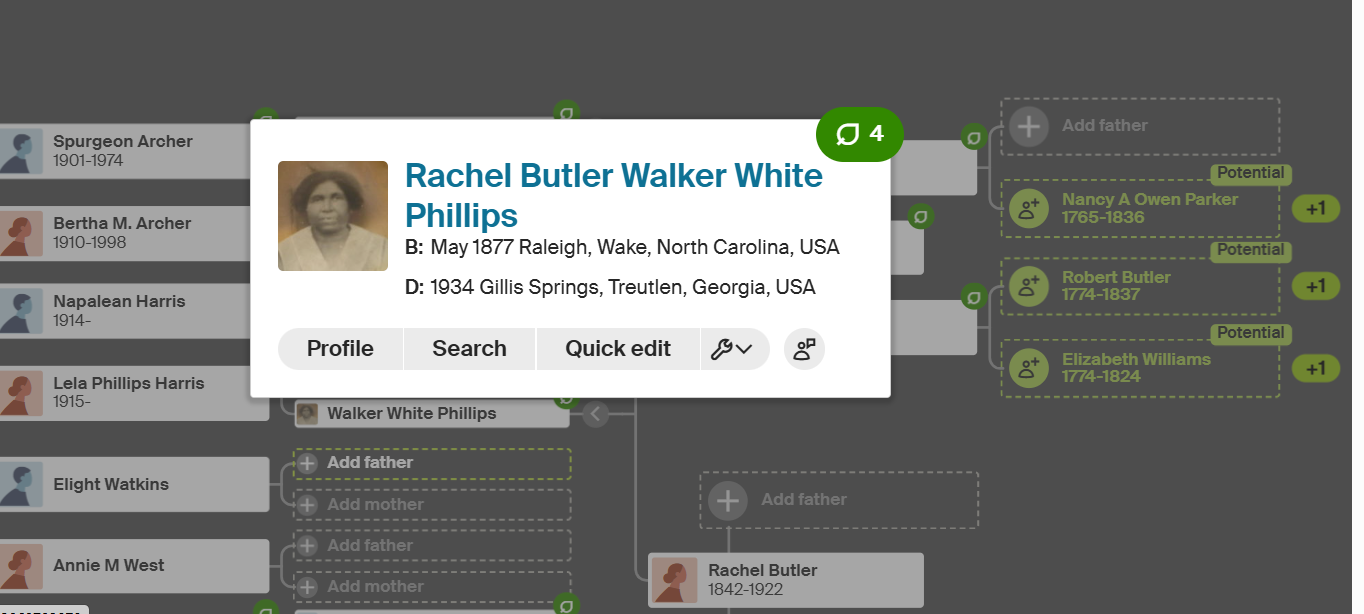
Ancestry.com is a personal example, to access information about my 2nd great grandmother I had to subscribe to a monthly membership to have access to public records as well as building family tree digital tools. It has compiled records in one place but none the less paying to view access to public records such as U.S census does seem to pose a risk at undermining overall efforts of #transformDH. After submitting my credit info to enroll in a monthly subscription, I now had access to pictures of my 2nd great grandmother on my father's side as well as dates and locations. The barrier to access does pose a risk and raises more concerns around ownership. Recovery of alternate constructions of humanity that has been historically excluded restores black folks' humanity.
Jasmine Harris | SEP 12, 2024
Share this blog post
 OfferingTree